
Road Hustle:Tap, Solve, Escape
Lush Forest LimitedPuzzle
4.8474.00 Reviews
- Version
- 1.0.46
- Installs
- 1.00M
- Age Rating
- Everyone
Screenshots

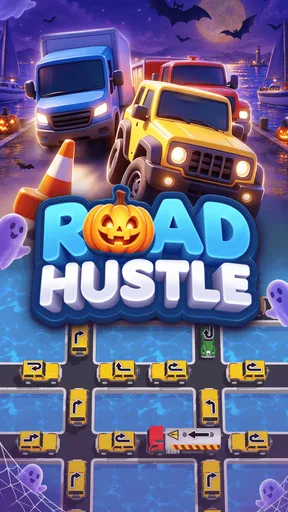
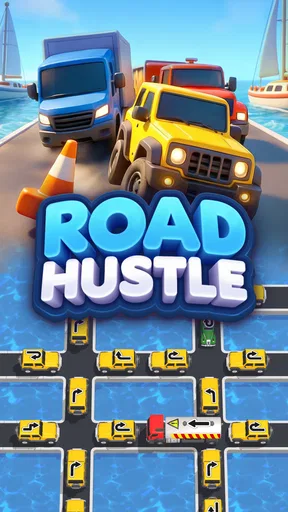
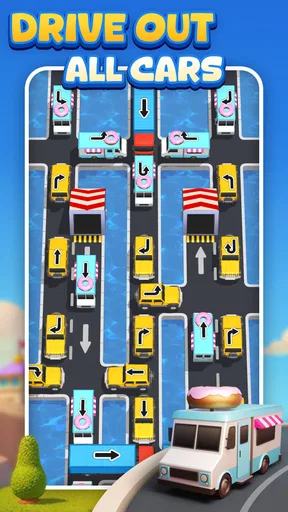
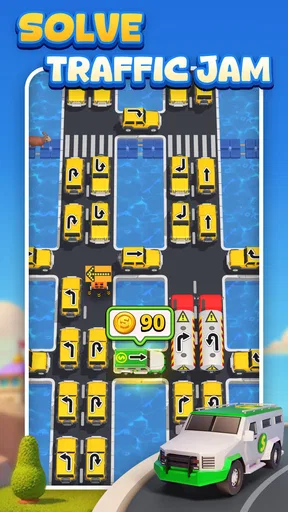
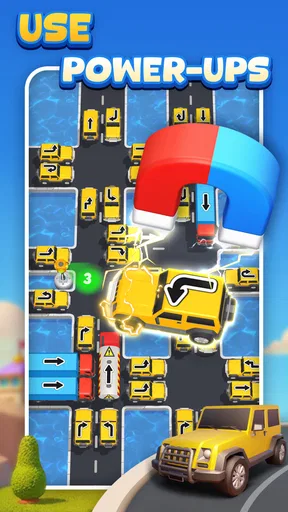

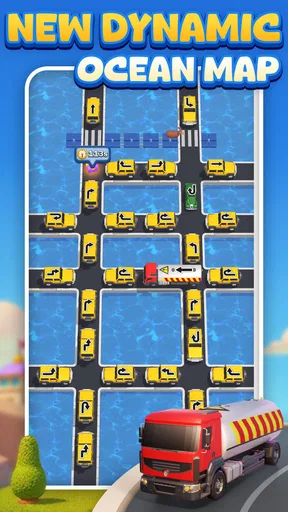
Our Review of Road Hustle:Tap, Solve, Escape
 Analysis by Appyee
I went into Road Hustle:Tap, Solve, Escape expecting a quick traffic puzzle and found a game built around a very clear question: can I make the right move before the road turns into a mess? The appeal is immediate. I look at the situation, tap to act, watch the result, and then decide whether I understood the mistake or simply need a better plan. That small cycle makes it easy to start a short session and surprisingly difficult to stop at the next one.
This is a free puzzle game from Lush Forest Limited, available for Everyone and running on Android 7.0 or later. Its audience is already substantial, with over one million installs and a 4.8 average from around twenty-two thousand ratings. Those numbers do not replace hands-on judgment, but they do fit my experience: the game is simple to approach, quick to understand, and satisfying when a crowded road finally starts moving the way I intended.
From the first tap to a workable plan
The first action is the important part of the design. Road Hustle does not ask me to learn a long rulebook before I can play. I begin by reading the traffic situation and choosing a move. That makes the opening feel closer to solving a visual problem than managing a complicated simulation. The screen gives me a puzzle to interpret, and the tap is my commitment.
That simplicity is useful on a phone. I can play while waiting for an appointment or during a short break without needing to remember a large control scheme. The challenge comes from deciding what should happen first. A move that looks harmless in isolation can create a blockage, while a more careful sequence can clear space and keep the road under control.
My best advice for new players is to stop treating the first available move as the best move. I found it more useful to scan the whole traffic pattern before tapping. Look for the vehicle or route that is limiting everything else, then consider whether moving it will open several options. This habit turns the game from random tapping into a small planning exercise.
That is also where the title’s “tap, solve, escape” idea becomes tangible. The tap is not the entire game; it is the visible expression of a decision. The real work happens in the pause before it, when I ask what the road will look like after the move and which problem might appear next.
Why the road feels readable rather than overwhelming
The traffic theme gives the puzzles an advantage over abstract matching boards. I can understand a jam intuitively. Cars, lanes, openings, and blocked paths create a visual story, so even a failed attempt usually tells me something. When a route collapses, I can often identify the earlier choice that caused it instead of feeling that the outcome was arbitrary.
Still, the presentation can make the game feel more relaxed than it really is. The colorful traffic setting suggests a casual experience, but the better solutions require patience. Players who tap quickly because the screen looks busy may create their own difficulty. I enjoyed it more once I accepted that the road rewards observation before speed.
A useful everyday scenario is a short commute break. I can finish a small attempt, put the phone away, and return later without needing a long warm-up. The game works particularly well for that kind of interrupted play because each puzzle gives me a defined problem rather than an open-ended world to maintain.
The feedback rhythm after every decision
The strongest part of the core loop is the feedback rhythm: action, visible result, correction, and another attempt. I tap, the traffic responds, and the new arrangement tells me whether my idea was sound. That immediate response keeps the learning process moving. I do not have to wait through a lengthy explanation to understand that I opened the wrong path or created a new obstruction.
For me, the feedback is most useful when I read it diagnostically. Instead of asking only whether I succeeded, I ask what changed because of my move. Did I free a route? Did I consume an opening that another vehicle needed? Did I make the remaining choices narrower? Thinking this way helps separate a genuine solution from a lucky sequence.
There is a small but important trade-off here. Players looking for fast arcade action may find the deliberate rhythm slower than expected. The traffic theme can suggest frantic movement, yet the satisfying decisions are usually measured ones. This is better suited to someone who enjoys spotting patterns than to someone who wants constant reflex challenges.
I also noticed that the game’s short-loop structure makes mistakes feel manageable. A failed attempt is not a major investment of time, so I am more willing to test an idea. That matters in puzzle design: if restarting feels expensive, players become overly cautious; if it feels approachable, they experiment and learn.
Reward without losing the puzzle focus
The reward in Road Hustle is not only the completion itself. It is the moment when a tangled road becomes orderly because I found the sequence that makes everything fit. That transformation is the reason another session begins. I want to see whether the next traffic arrangement will demand a similar insight or force me to change my approach.
That reward is especially effective for players who like compact goals. I do not need a large story or a complicated collection system to feel progress from a solved situation. The satisfaction comes from understanding the board, making the right choices, and watching the result confirm the plan.
The game is free to download, with optional in-app purchases ranging from $0.99 to $99.99 per item. That is worth keeping in mind before recommending it to a child or to someone who prefers a completely purchase-free experience. The Everyone age rating makes the game broadly accessible, but adults may still want to review the purchase settings on a shared device.
In my view, the purchase model is less important to the core decision than the player’s tolerance for interruptions or optional spending. If your main goal is a casual traffic puzzler, the free entry point makes it easy to try. If you strongly dislike any game that presents paid options, this may not be your ideal puzzle download even if the basic concept appeals to you.
The current version is 1.0.46, and the game comes from Lush Forest Limited. I mention the version because it is useful when troubleshooting or comparing experiences with another player, but the more important point is how the design feels in practice: the game’s value rests on the quality of its decisions, not on a complicated feature checklist.
Resetting is part of the strategy
The reset is not merely a punishment for getting something wrong. It gives the loop its second half. After a failed sequence, I can return to the same problem with a clearer idea of what not to do. That makes the next attempt feel purposeful rather than repetitive.
I found it helpful to change only one decision at a time after a mistake. If I alter the entire sequence, I may solve the puzzle without understanding why. By keeping most of the plan and replacing the move that caused the blockage, I can learn the road’s logic more reliably. This is one of the simplest ways to make progress when a level seems stubborn.
Another useful approach is to identify the point where the puzzle became unsalvageable. The final traffic jam is often only the symptom. The real error may have happened several moves earlier when I used an opening too soon or moved a vehicle that was still serving as a useful buffer. Looking backward from the failure makes the reset more informative.
The reset loop will not suit everybody. Players who want a sense of continuous advancement may feel that repeating a traffic arrangement lacks momentum. A traditional match-three game may be a better alternative if you prefer constant board changes, quick combinations, and a more immediately visible score chase. A physics puzzle may suit you better if experimentation and surprising motion matter more than planning a sequence.
Road Hustle is a better fit when the pleasure comes from narrowing possibilities. The road is interesting because each move changes the choices that remain. I enjoy that kind of pressure, but I would not choose this game for a relaxing background activity where I can play without concentrating.
Who will get the most from it
I would recommend it to players who enjoy visual logic puzzles, short attempts, and the feeling of improving through observation. It is also a good choice for someone who wants a puzzle with a familiar setting rather than colored tiles or purely geometric shapes. The traffic theme makes the objective easy to grasp, while the sequence of decisions gives the game enough depth to hold attention beyond the first few attempts.
It works for different ages because the age rating is Everyone and the controls are approachable. Younger players may enjoy the immediate movement and road theme, while older players may focus more on planning and error analysis. For a family device, the main practical consideration is the presence of optional purchases rather than the basic control scheme.
I would be more cautious about recommending it to players who need a large narrative, competitive multiplayer, or a highly varied action experience. Nothing about the central appeal suggests that it is trying to replace a racing game. The traffic is a puzzle to organize, not a vehicle to drive. If you want steering, speed, and direct control, this will feel too thoughtful and too contained.
It may also disappoint anyone who expects every session to be different in a dramatic way. The reason to replay is usually to refine a solution or tackle another traffic problem, not to collect a sprawling set of unrelated activities. That focused identity is a strength for puzzle fans, but it is a limitation for players who need constant novelty.
How it compares with familiar puzzle alternatives
Compared with match-three games, Road Hustle asks for more planning and less rapid pattern recognition. In a match-three board, I often react to the best combination visible at that moment. Here, the attractive move may be the wrong one because it affects the road several steps later. That makes the game feel more like a compact logic exercise than a score-chasing reflex routine.
Compared with classic sliding-block puzzles, the traffic setting makes the consequences easier to visualize. I am not only moving shapes through a grid; I am trying to make a road function. The trade-off is that the theme may feel less elegant to players who prefer completely abstract puzzles with minimal visual decoration.
Compared with idle traffic games, this is much more hands-on. I am not waiting for resources to accumulate or upgrading a system in the background. Every useful result comes from a decision I make. That is a major advantage when I want active problem-solving, but it also means the game cannot be left running as a passive distraction.
Compared with action-heavy mobile games, it is gentler on reflexes and more demanding on attention. I do not need lightning-fast swipes, yet I do need to notice relationships between vehicles and openings. The best alternative depends on what kind of tired I am: Road Hustle suits a short mental workout, while a simple arcade game may be better when I want to react without planning.
Small habits that make difficult roads easier
My first practical tip is to separate the “must move” vehicle from the “nice to move” vehicle. A car that appears convenient may not be urgent. The vehicle blocking the largest number of future options deserves attention, even if moving it does not produce the most obvious immediate result.
Second, I try to preserve flexibility. When two routes are open, I avoid closing one unless the move clearly advances the solution. This is a useful principle in Road Hustle because a move can create progress while quietly removing the only escape route for another vehicle.
Third, I use failed attempts as maps of the puzzle. I remember the first point where the traffic became constrained, then begin the next attempt by testing an alternative before that point. This is more efficient than repeating the same opening and hoping the ending somehow improves.
Finally, I play in short focused bursts rather than while multitasking. The controls may be simple, but the game rewards noticing consequences. If I am watching television or answering messages, I am more likely to tap based on the immediate picture and miss the larger sequence. A few attentive minutes are better than a longer distracted session.
The friction points I would consider first
The biggest limitation is the narrowness of the central loop. Its action, feedback, reward, and reset structure is clean, but players who do not enjoy repeating a puzzle after a mistake may lose interest. The game does not need to be more complicated to be good, yet its focused design means there is little protection for someone who simply does not like traffic-based logic.
The other consideration is spending. Because the game is free and includes optional purchases, I would check the device’s purchase controls before handing it to a child. That is ordinary advice for any free mobile game, but it matters here because the broad age rating may lead families to assume there are no account or payment decisions to manage.
There is also a difference between accessible controls and effortless play. Tapping is easy; solving is not always easy. Someone looking for a game that can be played almost automatically may find the concentration requirement inconvenient. I see that as a fair trade-off rather than a design flaw, but it should shape expectations before downloading.
My verdict on the complete loop
Road Hustle succeeds because each part of its loop supports the next. The first tap creates a consequence, the consequence teaches me something, the successful sequence provides a clear reward, and the reset makes another attempt feel worthwhile. That structure is simple enough for a quick break but thoughtful enough to occupy my attention when I want a real puzzle.
I especially like that the traffic theme gives mistakes a visible cause. I can usually point to the choice that created the jam, which makes improvement feel earned. The game is not a replacement for a racing title, a story-driven adventure, or an endless arcade challenge. It is a focused puzzle experience for people who enjoy turning disorder into a workable sequence.
With a 4.8 average across around twenty-two thousand ratings, it has clearly found a receptive audience, and I can understand why. The free starting point, Everyone rating, and support for Android 7.0 or later make it easy to try, while the optional purchases are the main practical detail I would keep in mind.
My recommendation is simple: choose Road Hustle if you want a compact traffic puzzle where every tap matters and every restart teaches you something. Skip it if you need constant action, a deep story, or a game that never asks you to pause and think. For me, the strongest reason to return is not a flashy reward; it is the moment a road that looked impossible suddenly makes sense.
Verdict
Strengths of Road Hustle:Tap, Solve, Escape
- Quick tap-based gameplay is easy to learn and play anywhere.
- Puzzle challenges add variety beyond simple tapping.
- Short levels fit well into brief gaming sessions.
- Escape scenarios create a light sense of urgency.
- Simple controls make it accessible for casual players.
Limitations of Road Hustle:Tap, Solve, Escape
- Progress may feel repetitive after extended play.
- Some puzzles can seem unclear without trial and error.
- Frequent tapping may become tiring during longer sessions.
- The game may offer limited depth for experienced players.
- Ads or in-app purchases could interrupt the overall flow.
Similar Picks in This Category
View All
Block Blast!
HungryStudio4.8

Braindom: Brain Games Test
Lahana Game Studio4.6

AMAZE!
CrazyLabs LTD4.6

Sudoku - Classic Sudoku Puzzle
Oakever Games4.7

Art Puzzle - Puzzle Games
Easybrain4.8

Amaze GO!
Oakever Games4.9
Frequently Asked Questions
What is Road Hustle: Tap, Solve, Escape?
Road Hustle: Tap, Solve, Escape is a casual puzzle and escape-style game built around quick decisions, interactive tapping, and short challenge sequences. Players guide characters through dangerous road situations, solve simple obstacles, and choose the right actions to keep moving. The game focuses on fast reactions, visual clues, and trial-and-error gameplay rather than long story chapters or complex controls.
How do you play Road Hustle: Tap, Solve, Escape?
Gameplay is mainly controlled through taps. As each scene unfolds, you must examine what is happening, identify useful objects or actions, and tap the correct option at the right moment. Some situations require solving a small puzzle, while others test timing and observation. Choosing the wrong action can lead to a funny failure or force you to replay the scene and try another solution.
Is Road Hustle: Tap, Solve, Escape suitable for children?
The game is generally easy to understand because it uses simple touch controls and short visual challenges. However, parents should check the current age rating and store description before installing it, since content, advertisements, or optional purchases may vary by version and region. The escape and danger-themed situations are presented in a light, cartoon-like style, but younger children may still need occasional guidance.
Does Road Hustle: Tap, Solve, Escape require an internet connection?
Many levels in this type of game can usually be played offline after installation, which makes it convenient for short sessions while traveling or when mobile data is unavailable. Nevertheless, an internet connection may be needed for advertisements, analytics, updates, cloud features, or in-app purchases. Availability can differ between Android and iOS versions, so it is worth checking the store listing and testing the game after installation.
Is Road Hustle: Tap, Solve, Escape free to download?
Road Hustle: Tap, Solve, Escape may be available as a free download, but free access does not always mean that every feature is completely unrestricted. Depending on the version, you may encounter advertising, optional purchases, rewarded videos, or additional content. Before downloading, review the official Google Play or App Store listing for the latest pricing, permissions, supported devices, and purchase information.
Play our best games!


